Who it’s for · Racquet sports
A pickleball or padel club day, mapped.
How court bookings, open play, leagues, lessons, memberships, and bar tabs fragment one player relationship across the tools most clubs run today, and where Wayside connects them.
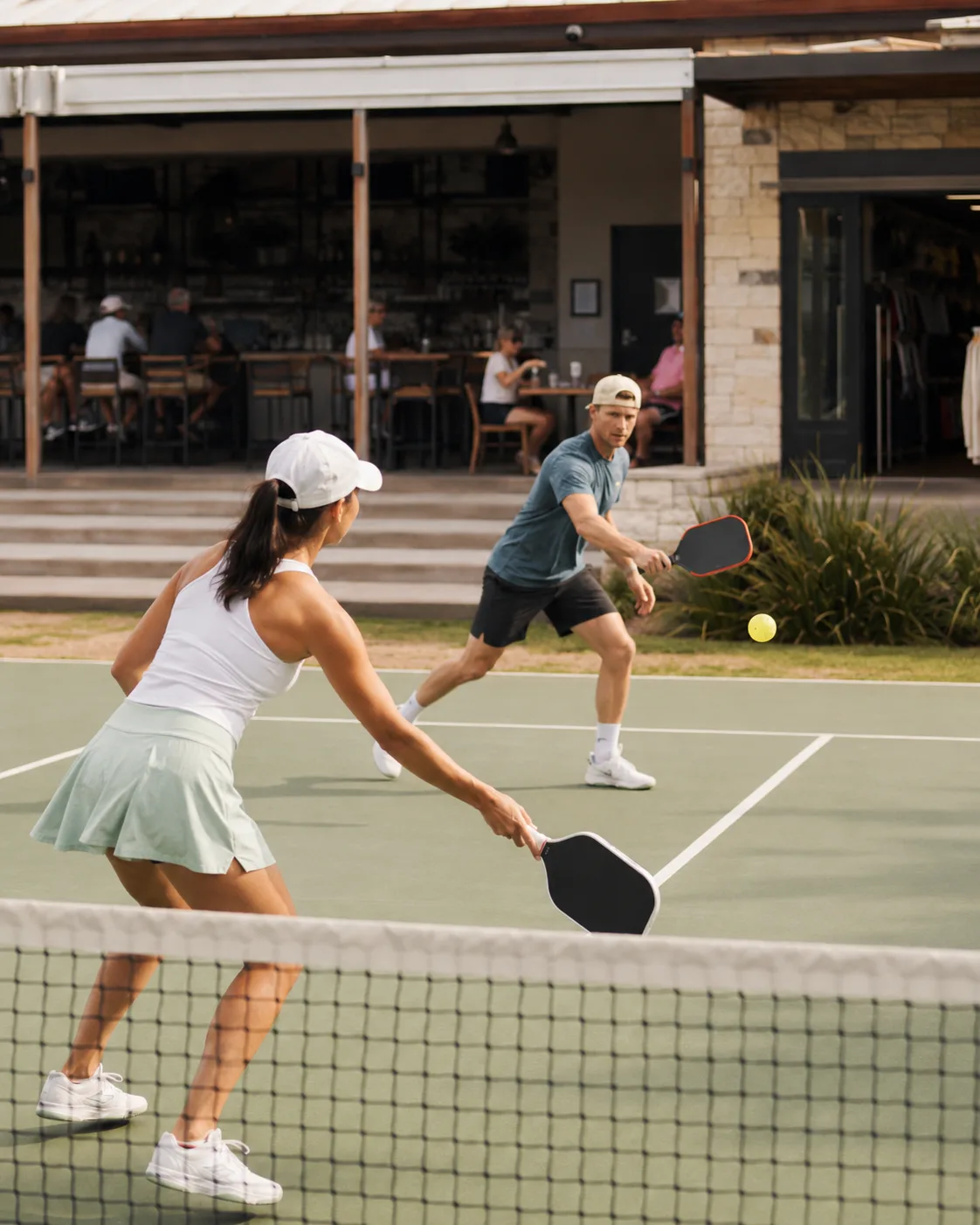
Where records split
The reservation app knows the slot. Nobody knows the player.
A member books a court, a first-timer joins open play, a league captain confirms the bracket, and everyone closes a tab at the bar. The reservation tool, membership list, league sheet, and POS each hold one piece.
- RESERVATIONS Court 4 · 7:30 Level and history unknown SEPARATE RECORD
- OPEN PLAY Drop-in joins Second visit looks like the first SEPARATE RECORD
- LEAGUES Bracket confirmed No link to membership status SEPARATE RECORD
- COMMERCE Bar tab and grips Spend is detached from the player SEPARATE RECORD
Riley drops into open play twice in one month, buys a paddle, and asks about a beginner league. Wayside joins the reservation, open-play, purchase, and league records on Riley’s history so the desk can see a new player worth converting.
In the product
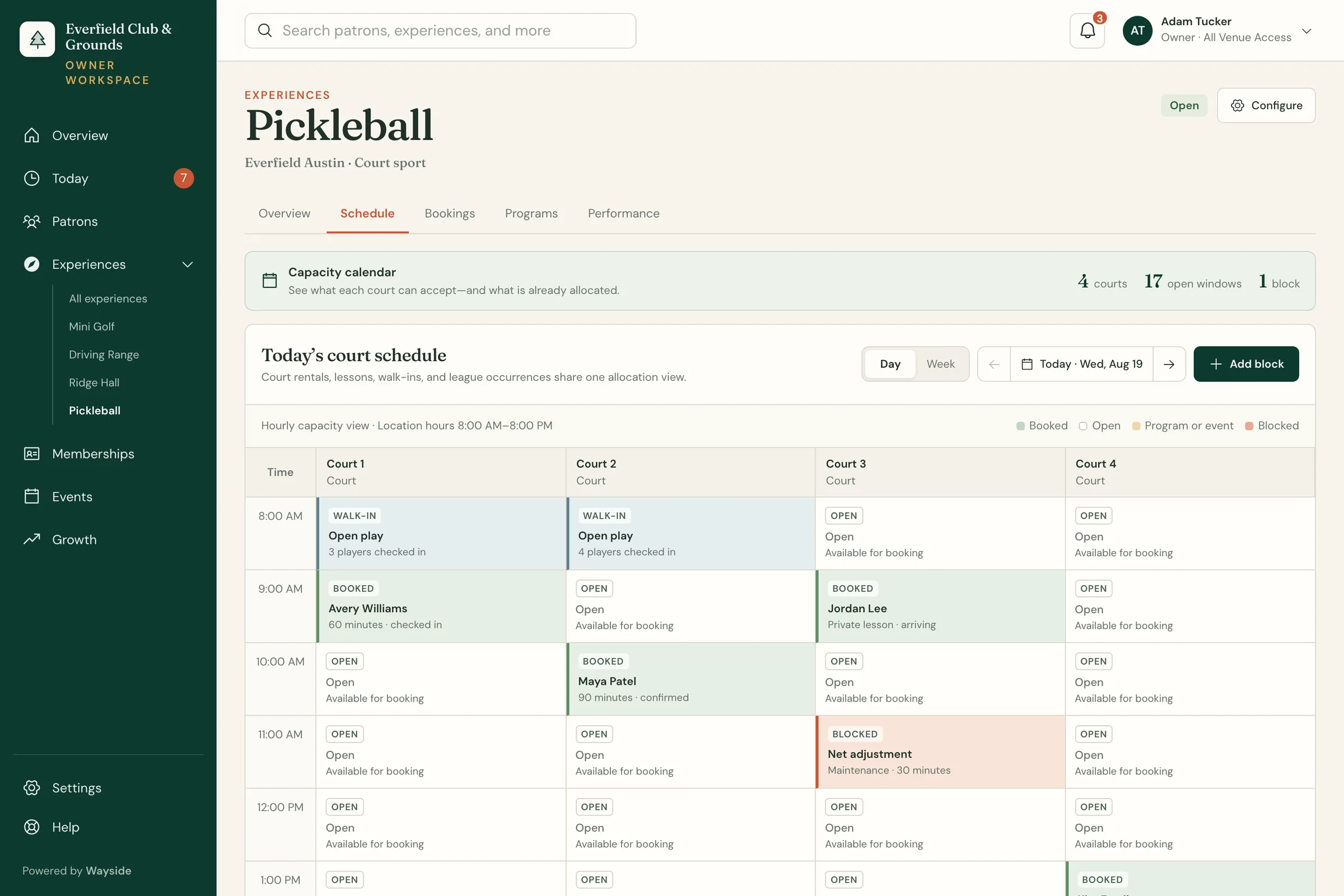
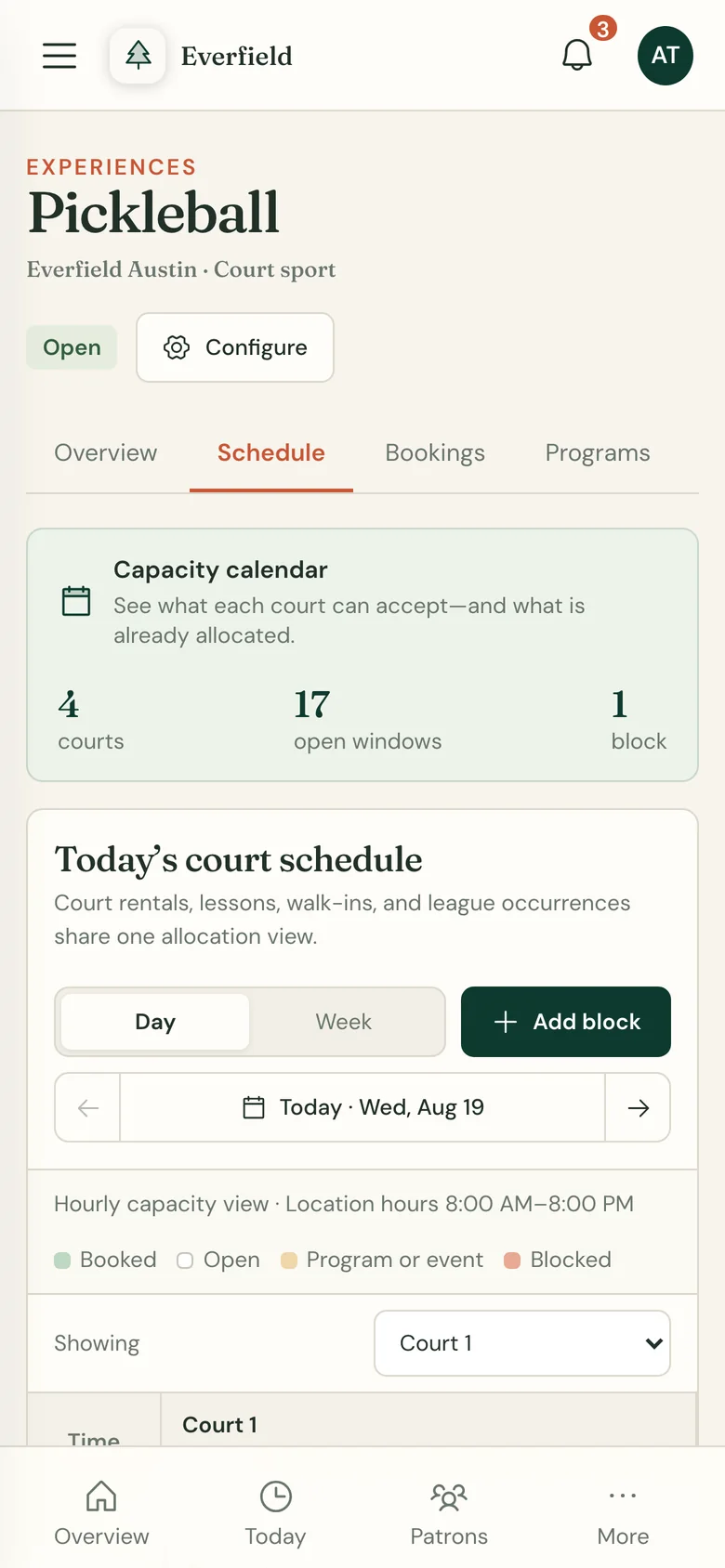
Court time, open play, and league night on one capacity view.
Rentals, lessons, walk-ins, and league occurrences share one allocation, with the player who booked attached to the block.
Everfield Club & Grounds · demo venue
The day, mapped
Where Wayside connects a normal day.
-
Court time starts in the booking app
A member books a court, a first-timer reserves open play, and a league organizer confirms a bracket. The reservation tool knows the slot; it rarely knows the person, their level, or whether they've been in before.
WAYSIDEThe operating goal is one arrival context per player, whether member, drop-in, league, or lesson, while the booking tool keeps owning the calendar.
-
Lessons, leagues, and the bar leave separate trails
A clinic finishes, a league night fills, and players close tabs at the bar. Each moment is recorded somewhere, and none of it adds up to a player history the front desk can see.
WAYSIDEApproved activity such as court sessions, lessons, and purchases can join the player record instead of living as separate daily totals.
-
Someone worth noticing is on the property
A first-timer who came for open play twice this month, a member whose court usage dropped, a league captain planning next season.
WAYSIDEThe team keeps the judgment. Wayside puts the relevant history in front of the operator at the moment it matters.
-
The first return loop
The club chooses whether a welcome, a lesson invitation, a renewal note, or a league nudge would actually be useful.
WAYSIDE · RETURN WORKERThe Return Worker prepares the draft; the operator approves, edits, or skips it before anything goes out.
Product surfaces
Put the shared record at the handoffs that need it.
FIRST CONNECTION TO TESTStart at open play: name the reservation field, the membership status, and who at the desk should see them together.
Production snapshot · Aug 14, 2026
Already running at a real venue.
The Acres runs mini golf, a driving range, food, events, and memberships on one Cincinnati property, on the same Wayside record this day draws on.
Read the operating story →- 751
- Active patrons
- 22
- Paid memberships
- 90
- Event inquiries
- 7
- Live modules
Production counts from The Acres on Aug 14, 2026.
Bring your club's normal day.
The 20-minute working session maps the reservation tool, memberships, leagues, and bar in your actual operation. You leave with the map.
A working session with a founder. No sales demo.