Product · Review + attribution
Review the draft. Date what followed.
Prepare a welcome, renewal, invitation, or follow-up from a recorded visit, purchase, event, or access change. The operator chooses; the receipt records what happened next.
AVAILABLE Messaging with consent and delivery status, drafts prepared by the Return Worker, operator review on one slip
Map your venue →The next useful note
Everfield · demo venue
Template, consent, suppression, and delivery status are checked before a message is sent.
- READY
- 3
- SUPPRESSED
- 1
- CHANNELS
- SMS · EMAIL
Membership welcome
Mina Patel · consent verified
Event follow-up
Friday league attendees
Return invitation
Avery Williams · quiet 28 days
GROWTH · EVERFIELD CLUB & GROUNDS
The reason is named before the draft exists.
A recommended opportunity in the Growth view: nine identified family patrons attended Saturday's party, with a known audience and a review step before anything sends.
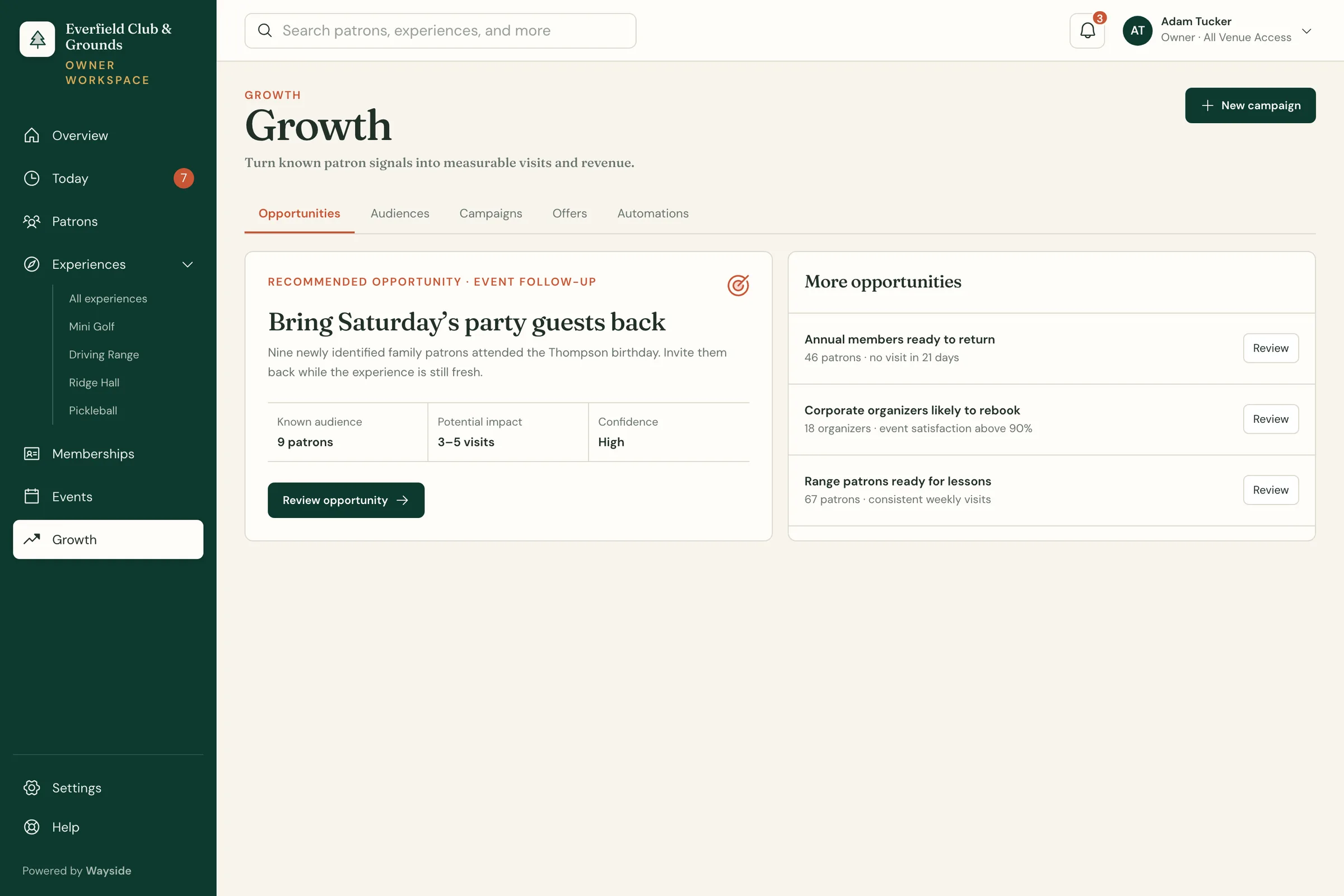
- OBSERVABLE REASON
- An attended event, expiring benefits, or a quiet regular, named on the opportunity.
- KNOWN AUDIENCE
- The count comes from the patron record rather than a list upload.
- OPERATOR REVIEW
- Review opportunity is the action. The operator decides before anything goes out.
Review slip
What belongs on the operator’s review slip?
The slip names the reason, audience, channel, operator, decision, and what happened next.
- Recorded reason
Every draft begins with a visit, purchase, event, access change, or other observable patron record.
- Named operator decision
Approve, edit, skip, or defer is recorded with the person and time responsible.
- An evidence receipt
Recommendation, operator choice, patron response, and return signal stay connected, and each carries its own date.
Editorial workflow
A return workflow has four accountable states: observed reason, prepared draft, operator decision, and later result.
- 01OBSERVE A reason enters review
An attended event, expiring access, or quiet regular is named on the slip.
- 02PREPARE Wayside prepares the draft
Reason, audience, approved channel, and source records appear beside the copy.
- 03REVIEW The operator chooses
Approve, edit, skip, or change the timing before anything reaches the patron.
- 04ATTRIBUTE Later events update the receipt
Response and return land on the receipt as the venue records them.
IN PRACTICE
What it does, and how we set it up.
Wayside prepares and tracks SMS and email, including consent, suppression, retries, and delivery status.
Your venue sets the sending accounts, sender identity, consent policy, and message templates. Then communication goes live.